Strasbourg or Colmar: Where to Start an Alsace Wine Day
The short answer. Colmar sits in the middle of the vineyard and Strasbourg sits at the top of it. The castle publishes both distances itself: 26 km from Colmar, 55 km from Strasbourg. Base yourself in Colmar if the wine route is the reason you came, and in Strasbourg if you want a city first and the vines second. Both towns have kerbs a guided day leaves from, and the two are 58 km apart in a straight line.
The distance that actually decides it
The Route des Vins d'Alsace runs more than 170 km, from Marlenheim in the north to Thann in the south, across 119 communes. It was inaugurated in 1953, which makes it one of the oldest of France's wine roads rather than the oldest. Colmar sits roughly halfway along it. Strasbourg sits off the top end, with a plain to cross before the vines begin.
That one fact runs through everything below. Comparing fares from both towns? They are side by side on Alsace Wine booking.
| From Strasbourg | From Colmar | |
|---|---|---|
| To the castle, by the castle's own figure | 55 km | 26 km |
| Position on the wine route | Off the northern end | About halfway |
| Kerbs a guided day leaves from | Three, one a tram ride out | Two fixed, plus chosen pick-ups |
| Typical short day | Four hours | Three and a half hours |
| Rain in an average year | 636 mm | 595 mm |
| Sunshine in an average year | 1,747 hours | 1,882 hours |
Where the days leave from in Strasbourg
Three kerbs, and they are not interchangeable. The station square at 8 Place de la Gare is where the short wine runs meet, next to the pharmacy rather than inside the station. 17 Place de la Cathédrale, outside the tourist office, is where the long days gather, most of them at 9:00am. The coach station at the Place de l'Étoile is the third, and it is a tram ride out from the centre rather than a walk.
Read your confirmation. Two of the three are within ten minutes of each other on foot, which is exactly how people end up at the wrong one. Every meeting point is drawn on the map.
Where the days leave from in Colmar
Colmar works differently. Two fixed kerbs, 2 Avenue de la Marne in front of a hotel and 6 Rue Turenne in front of a winstub, and then a set of days that collect you at a point you choose when you book. The half day out of Colmar leaves at 1:45pm, which is unusually late and leaves a whole morning free.
If your accommodation sits outside the centre, message the provider after booking rather than hope. That single message is the difference between a clean start and standing on a corner watching the time.
What each town reaches before dark
From Colmar, a half day gets you into the vineyard and back with time to spare, and a full day takes in four villages without feeling rushed. Eguisheim is on the town's doorstep, Kaysersberg and Ribeauville are a short run north, and the open-top bus that loops the route stops at all of them. Every one of that bus's six stops sits in the Colmar half of the road.
From Strasbourg, the arithmetic is harder. A four-hour day spends a good chunk of itself on the plain: on one of them you get about two hours twenty on the ground, and most of that is an hour and a half in Obernai. The full days from here are eight to ten and a half hours long for a reason. If you only want the vines, going long is the honest option, and what a half day actually fits in breaks the four hours down minute by minute.
The bus that only works from Colmar
There is a third way to do the route, and it only makes sense from the southern town. An open-top bus loops between six wine-route villages on a day ticket, from 8:30am to 7:00pm, and you get off wherever you like. Its stops start at Colmar station and the Unterlinden, then run through the villages to the north and south. Nothing on it serves Strasbourg at all.
It runs a season rather than a year: 3 April to 11 October in 2026, and not every day inside that. It also pours nothing, which is its own decision to make, and the days that include the tasting sets out which fares do. As a way to see the villages at your own pace from a Colmar bed, though, it costs $48 and nothing on the route is cheaper.
The weather is not quite the same in both
This sounds like a detail and is not. The national weather station at Colmar-Meyenheim records 595 mm of rain and 1,882 hours of sun in an average year. Strasbourg-Entzheim records 636 mm and 1,747 hours. The vineyard sits in the rain shadow of the Vosges, and Colmar is further into it.
Over a week it is a difference you will not notice. Over an afternoon booked outdoors it occasionally is. The month-by-month picture is on the weather page, and when to visit sets out what changes through the year.
The evening you are not on the route
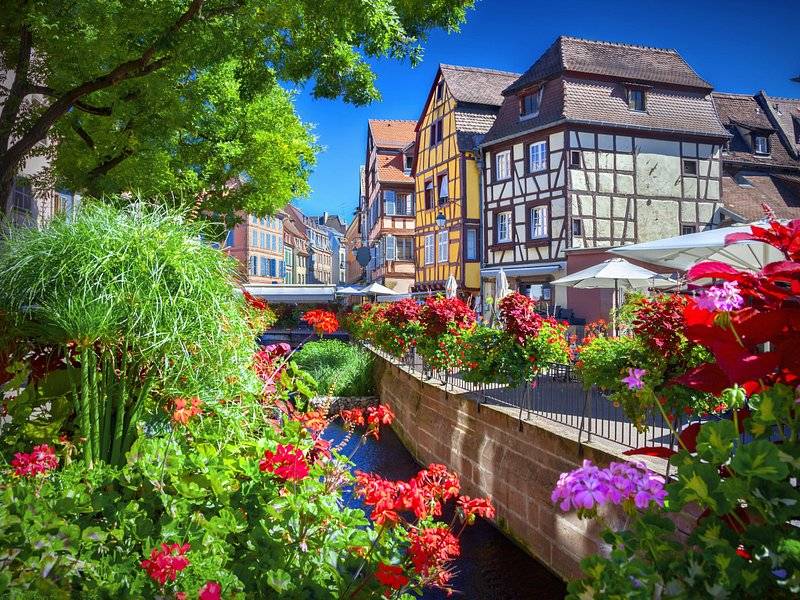
Strasbourg wins this easily. It is a city, with a cathedral, a river quarter and somewhere to eat at ten at night. Colmar is a small town that photographs beautifully and empties earlier, though its canals do most of what people came for and the Unterlinden museum charges €14 for an adult.
If you are choosing between one night in each, that is the split: the wine day out of Colmar, the evening in Strasbourg. Where to sleep in either, and in the villages between them, is covered on where to stay.
Which one should you book?
- Two nights, wine is the point: stay in Colmar and take a full day into the villages.
- Two nights, first time in Alsace: stay in Strasbourg, take a half day out to the route, keep an evening in the city.
- Three nights or more: one night in each, and a village night between them if you are driving.
- Arriving by train at midday: Colmar, and the afternoon start.
- Travelling with children: Strasbourg, where the long days take younger travellers and the short wine runs do not.
Neither choice is wrong, and both towns put you on the same road. What changes is how much of your day the road takes. The full list of kerbs, minimums and what each fare covers is in the visitor guide, and the villages themselves are described one by one on the things to do page.
Days that leave from each town
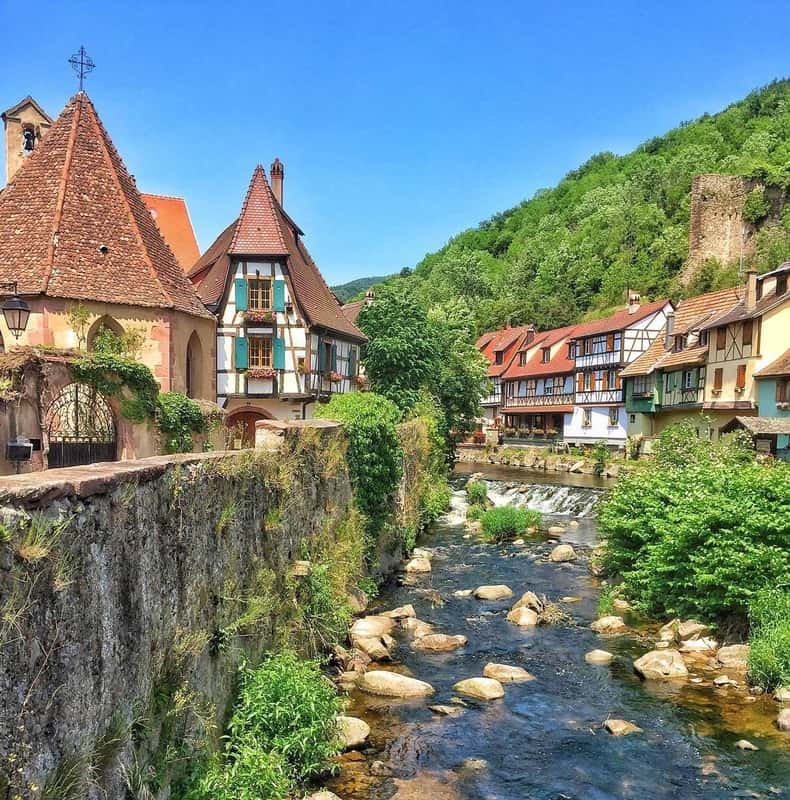
From Strasbourg: Medieval Villages & Wine Tasting Day Trip
The fullest day from Strasbourg: nearly six hours on the ground across four villages, an hour with the winemaker, and a tasting in the fare. Cancelling free needs two days' notice, not one.
From $143 per person
Check Availability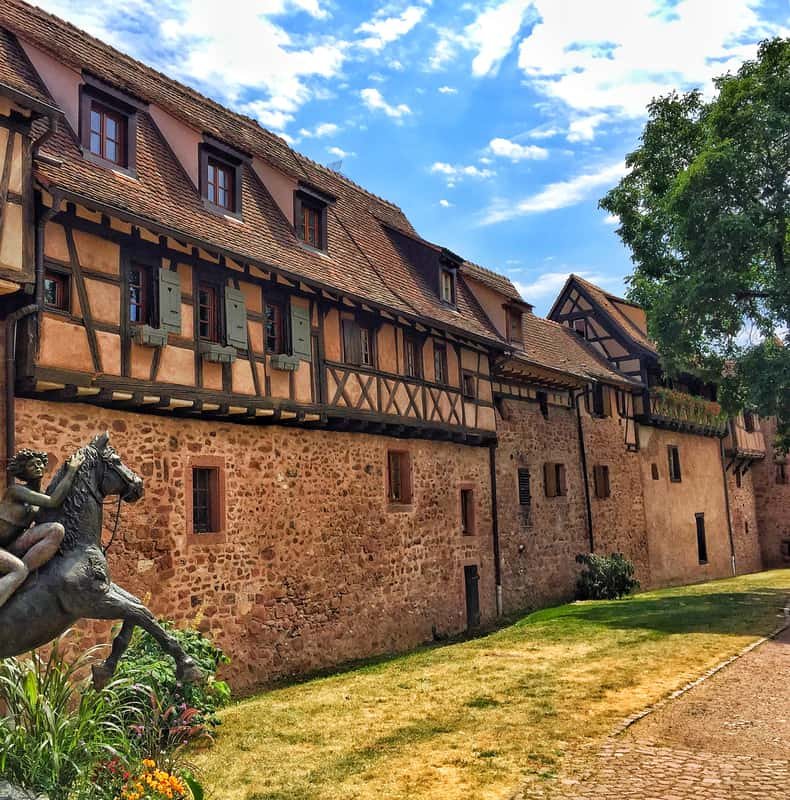
From Colmar: Castle, Alsace Villages & Wine Tasting
A long day from Colmar with the castle ticket in the fare, three villages, the Sigolsheim necropolis and an hour at a winery. A French-speaking driver, with audio in twelve languages.
From $160 per person
Check Availability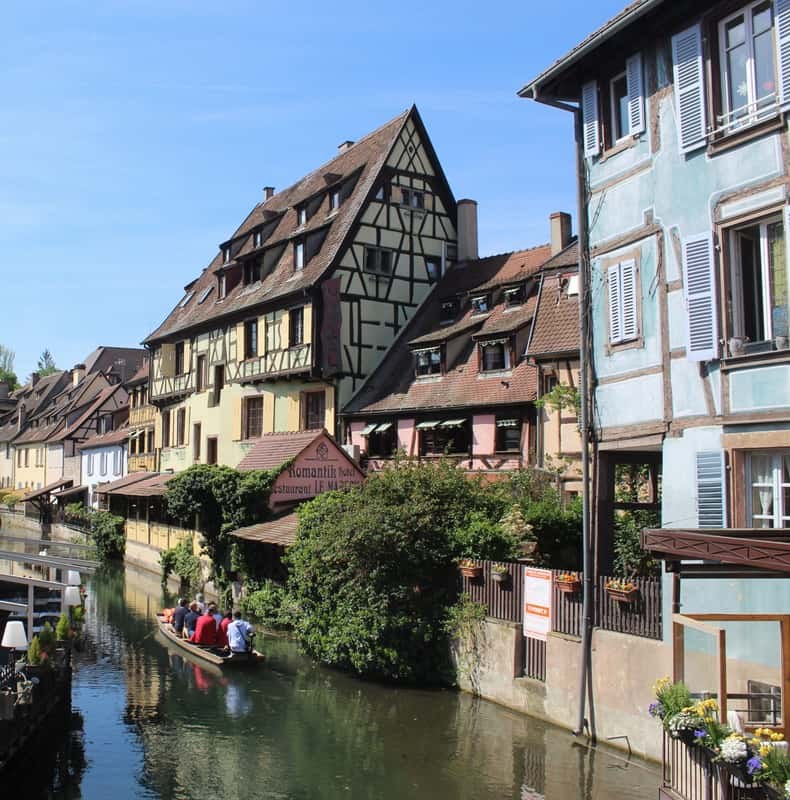
Colmar: Highlights Walking Tour and Wine Tasting
Two hours on foot through Colmar's old town, ending at a wine cellar with the tasting already in the price. Six walkers at most, so it books out early.
From $51 per person
Check AvailabilityNext: See which fares carry the castle in castle entry on a wine day. Every fare sits side by side on Alsace Wine Tours.