Castle Entry on an Alsace Wine Day: Which Fares Carry It
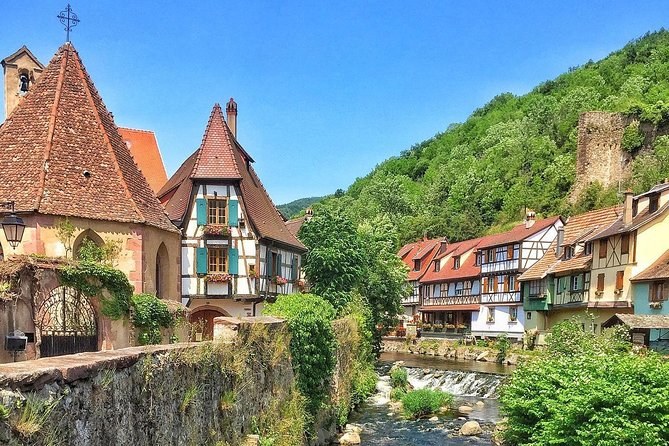
The short answer. Haut-Kœnigsbourg charges its own admission, and most wine days do not cover it: €12 for an adult self-guided visit, €16 with the audio tour, €8 for a 6-17 and €30 for a family of up to four. Only a few days here put that ticket in the fare, and they are the ones built around the castle rather than around the cellars. Last entry is always an hour before closing.
What the castle charges on its own
The castle sits above Orschwiller, on a spur of the Vosges with the whole Alsace plain below it, and it runs its own ticket office. These are its published bands. Weighing a castle day against a wine day? Both sit on Alsace Wine tickets.
| Who | Self-guided | Note |
|---|---|---|
| Adult | €12 | €16 with the audio tour |
| Young visitor, 6 to 17 | €8 | Under 6 goes free |
| Reduced and disabled | €6 | On proof, at the desk |
| Family | €30 | Up to four people, at most two adults |
| Group of 20 or more | €8 | Per head, booked ahead |
| School group | €2 | Per pupil |
Two regional passes are accepted at the gate, the Pass'Alsace and the Museums-PASS-Musées, which is worth knowing if you are here for a week and plan to see more than the vineyard.
The days it costs nothing
Entry is free on the first Sunday of every month from November to March, on European Heritage Days and on Museum Night. Those are also, predictably, the busiest days of the castle's year. If you are travelling in winter and your dates line up, it is a real saving; if you dislike queues, it is a reason to pick a different Sunday.
Which fares carry the entry
Three, and they are easy to tell apart. The long day out of Strasbourg through Colmar and a walled village puts the castle ticket in the price and gives it three hours, which is the most time anything here spends up there. It is also the day that pours no wine at all, and which days include the tasting explains why that matters.
The long day out of Colmar carries the ticket as well, alongside the villages, the necropolis above Sigolsheim and an hour at a winery, for $160. And the private day by car includes it for a party of up to four, planned around whatever you ask for, at $878 for the vehicle rather than per person.
Everything else on the route leaves the castle alone. A tour that drives past it, or stops in the car park for a photograph, has not bought you a ticket.
How long you actually get up there
- Three hours on the day from Strasbourg, which is enough for the whole circuit without hurrying.
- Ninety minutes on the day from Colmar, which covers the ramparts, the keep and the courtyard at a brisk pace.
- Forty minutes on the private day, because that itinerary is built around four stops rather than one.
- As long as you like if you come under your own steam, which is the only way to sit on the ramparts and watch the light change.
Going on your own
You can, easily, and it is the cheapest way to see it. The address is 67600 Orschwiller, and the A35 leaves you at exit 17 or 18. There are 150 free parking spaces at the castle, six of them reserved, plus coach parking. Without a car, line 500 runs up from Sélestat's SNCF station at €3 a journey.
The castle is 26 km from Colmar and 55 km from Strasbourg by its own reckoning, which is the clearest argument for basing yourself in the south if the castle is high on your list. Strasbourg or Colmar weighs that choice up properly.
The climb inside
This is not a flat visit. The route through the castle takes in about 300 steps of differing heights and orientations, and there is no way round them. Wear something you can walk in. If stairs are hard for you, plan for that before you book, because none of the days that include the entry is wheelchair accessible.
It is also busy. The castle counted 596,708 visitors in 2023, and a guided day arrives when everyone else does. Your own car, and an opening-time start, is the way to have the courtyards nearly to yourself.
What you are actually looking at
The castle is first recorded in 1147, built by the Hohenstaufens, and within ten years it was called Koenigsbourg, the royal castle. It was besieged, pillaged and burned in 1633, during the Thirty Years' War, and then left as a ruin for two centuries.
What you walk through today is largely a rebuilding. In 1899 the town of Sélestat gave the ruins to Kaiser Wilhelm II, Alsace being German at the time, and his architect Bodo Ebhardt restored the whole castle between 1900 and 1908. After 1919 it passed to the French state. That back-and-forth is the story your guide will tell, and it is why a German emperor's hall sits in a French national monument. Jean Renoir filmed La Grande Illusion here in 1937 for exactly that reason.
Castle and cellar in the same day
It can be done, and only one arrangement does it properly: the long day out of Colmar, which carries the castle ticket and still gives you an hour at a winery. Everything else asks you to choose. The wine days stay on the route and never climb the hill; the castle day from Strasbourg climbs the hill and never opens a bottle.
If you want both and have the time, split them. Give one day to the vineyard and its cellars, and a second to the castle on your own schedule with the shuttle or a car. The villages you will pass on either are described on the things to do page, and the frequently asked questions answer the practical ones.
Days that carry the castle ticket
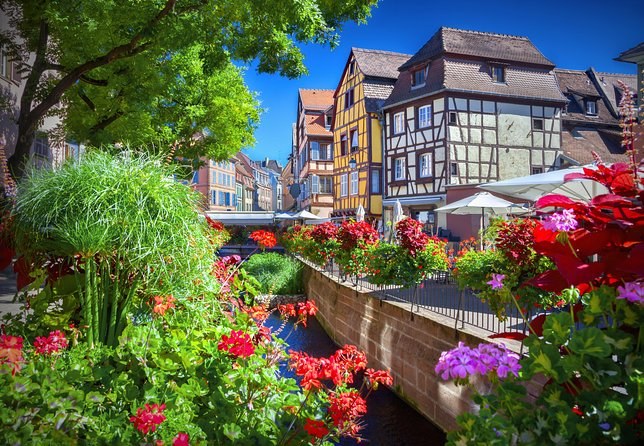
Colmar, Medieval Village & Castle Small Group from Strasbourg
Colmar, Riquewihr and the castle from Strasbourg, with the castle ticket in the fare. It pours nothing: this day is about the villages and the ramparts.
From $199 per person
Check Availability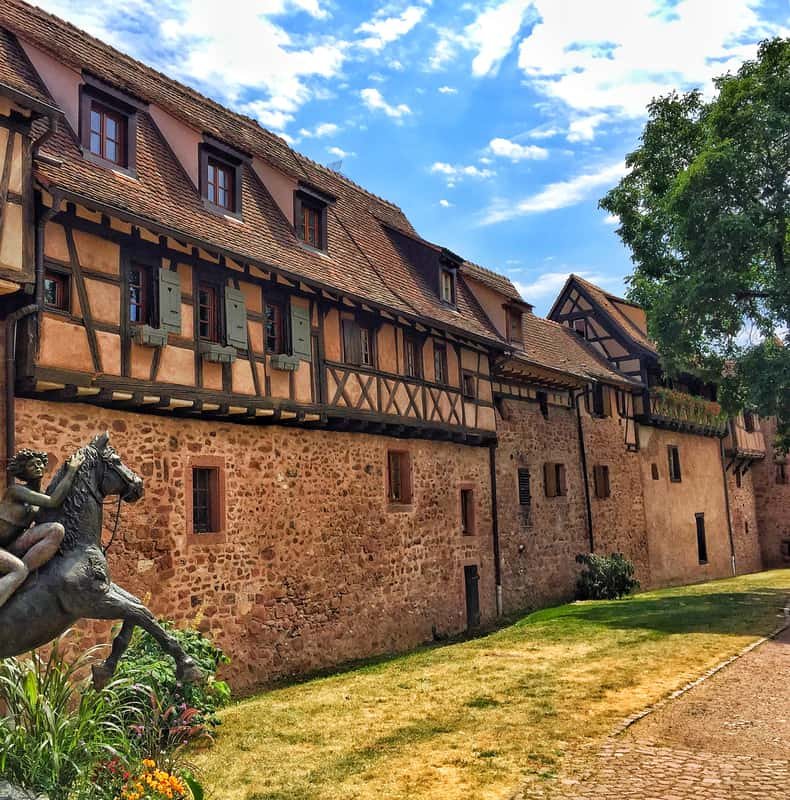
From Colmar: Castle, Alsace Villages & Wine Tasting
A long day from Colmar with the castle ticket in the fare, three villages, the Sigolsheim necropolis and an hour at a winery. A French-speaking driver, with audio in twelve languages.
From $160 per person
Check Availability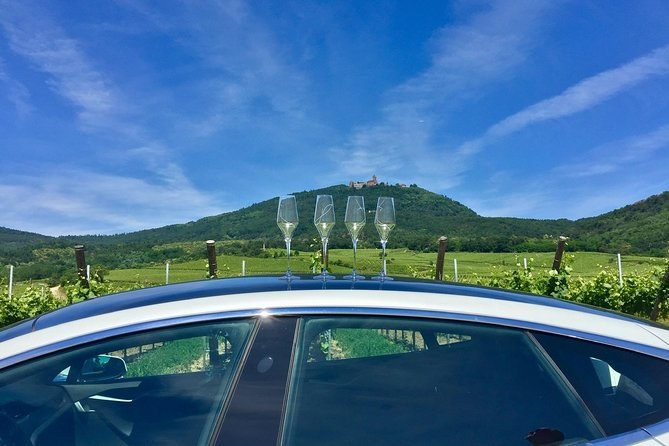
FULL DAY ALSACE PRIVATE TOUR : Tailored by your Friendly Driver
A private day for up to four, castle entry in the fare, then Riquewihr, Eguisheim and Colmar's Little Venice. The car is a Tesla and the driver plans the day with you.
From $878 per group, up to 4
Check AvailabilityNext: See what four hours on the route actually holds in a half-day Alsace wine trip. Every fare sits side by side on Alsace Wine Tours.