Doing the Alsace Wine Route Without a Tour
You do not need a tour to see the Alsace Wine Route. It is a public road with no gate and no ticket. What a tour buys you is a driver who does not drink, a cellar that expects you, and a plan. This guide tells you how to do it alone, and when Alsace Wine tickets for a guided day costs you less than going it alone.
Is the Alsace Wine Route a public road?
Yes. The Route des Vins d'Alsace was opened in 1953 and runs more than 170 km through 119 communes, from Marlenheim in the north to Thann in the south. A separate stretch sits around Wissembourg, at the far north of the region. There is no entrance, no toll and no opening time: you drive, cycle or walk it whenever you like.
The regional tourist board calls it one of the oldest wine routes in France. No official body calls it the oldest wine route in France, so neither do we.
Where does the route start and end?
In Marlenheim, west of Strasbourg, and in Thann, west of Mulhouse. Between them it follows the foot of the Vosges, through villages such as Obernai, Mittelbergheim, Dambach-la-Ville, Ribeauvillé, Riquewihr, Kaysersberg, Turckheim and Eguisheim. In a straight line, the two ends are 95 km apart.
You will not drive it end to end in a day and still stop anywhere. Pick a stretch. The southern one, around Colmar, packs the best-known villages close together. Our map of the route shows where each sits.
Can you drive it and still taste?
One of you can drive, and the others can taste. That is the whole answer. French drink-drive law is strict, the roads between villages are narrow, and three cellars in a morning is more than any driver should taste.
So choose your driver before the day, and let them buy bottles to open at home. A grower is used to it, and a tasting is poured to be spat as well as swallowed. If nobody wants to stay off the wine, book a day with a driver.
Can you reach the villages by train?
Some of them. The regional TER network runs 14 lines and 161 stations across Alsace, and you can take a bike on board for free, except between Strasbourg and Basel at rush hour. The regional planner, Fluo Grand Est, combines trains, trams, buses and coaches for a single trip.
- Obernai has a station 500 metres from its centre, on the Strasbourg to Molsheim to Sélestat line.
- Sélestat has a station, and line 500 runs from it to the castle for €3 a journey.
- Colmar and Strasbourg are 58 km apart in a straight line, with a frequent train between them.
The villages most people come for, Riquewihr, Kaysersberg and Eguisheim, are where the bus earns its fare.
What does the open-top bus do, and what doesn't it do?
The KUT'ZIG bus fills that gap in season. A day ticket, $48, lets you ride a 28-seat open-top bus from 8:30am to 7:00pm and get off at Colmar station, the Colmar tourist office by the Musée Unterlinden, Ribeauvillé, Riquewihr, Kaysersberg, Turckheim and Eguisheim. An audio app talks you through the route in four languages.
It does not guide you, and it does not pour. Its listing excludes winery tours and tastings, entry tickets and meals. It runs from Friday 3 April to Sunday 11 October 2026, at weekends in spring and autumn and from market day to Sunday in summer. Outside that it can only be hired privately.
Do you need an appointment at a cellar door?
For a glass at the counter of a village caveau, usually not. For a tour of the cellar, yes: growers are farmers first, and at harvest most hands are in the vines. Ring or write the day before, and say how many of you are coming.
The vineyard walk near Colmar shows what a booked visit looks like: an hour in the rows, an hour in the cellar and vat room, and an hour tasting six wines. It costs $65 with the guide, and you reach the estate yourself.
What does a cellar-door tasting cost?
Each grower sets its own terms, and no official body publishes a price, so we do not print one. Terms differ from one grower to the next, so ask at the door before you taste.
The tours give you a benchmark. The 4 Wonders day buys its tasting at a cave on the day, and the Riquewihr walk sells a tasting of one family's wine as an extra. The vineyard walk, with six wines and three hours of a guide, is $65.
Can you cycle the route?
Yes, and the train makes it easier. Take your bike on a TER train free of charge, get off at Obernai or Sélestat, and ride south among the vines. The villages sit close together at the foot of the hills, so a day of riding covers several of them.
The same rule applies as in a car: taste lightly if you are riding home, and carry your bottles in a pannier rather than a backpack.
What does a self-guided day by bus look like?
Here is one way to use a day ticket in season. Board at Colmar station at 8:30am and ride to Eguisheim first, while its lanes are quiet. Take the next bus to Kaysersberg, walk up towards the fortress and eat lunch in the old town. In the afternoon, ride on to Riquewihr, find a cellar inside the walls, and taste with nobody waiting to drive you.
End at Ribeauvillé if you still have energy, then ride back to Colmar before 7:00pm. The audio app tells you where the bus is and when the next one comes. You pay $48 for the ticket and whatever each cellar asks.
If you would rather have a guide in one of those villages, the Riquewihr walk meets at the Musée du Dolder and runs about two hours.
What does a self-drive day cost?
Less than a tour for a group, more than you expect for one person. Here is how the two compare.
| On your own | On a guided day | |
|---|---|---|
| Transport | Your car and fuel, or the train and bus | In the fare |
| The driver | One of you stays off the wine | Not your concern |
| The tastings | Each grower's own terms, paid at the counter | In the fare on most days |
| Castle ticket | €12 an adult, €16 with audio | In the fare on three days |
| Castle without a car | Line 500 from Sélestat, €3 | In the fare |
| Planning | You book the cellars | Done for you |
| Bus day ticket, in season | $48 | Not needed |
When is a tour cheaper than doing it yourself?
When you are one or two people without a car. Hire a car for a day, pay for fuel and parking, and a half day at $114 a head with two tastings in the fare starts to look cheap. The same is true of the castle: the castle day from Colmar costs $160 with the ticket, a winery and the transport, where the ticket alone is €12.
A group of four with a car saves money going alone, as long as one person is happy to drive. So does anyone who only wants one village and one cellar. Compare the guided days on the Alsace wine tours from Colmar and Alsace wine tours from Strasbourg pages.
Who should not do this alone?
- Anyone who wants three tastings. Somebody has to drive; on a tour, nobody in your party does.
- A first-timer with one day. A guide who knows the growers gets you into cellars that a stranger at the door may not.
- Anyone visiting outside the bus season. In 2026 it runs from 3 April to 11 October; outside it, the hill villages need a car.
- Someone who wants a walk with a local. The Alsace walking tours with wine tasting are cheaper than most day tours and give you a guide on foot.
Frequently asked questions
Can I drive the Alsace Wine Route myself and taste?
Can I reach the wine villages by train?
Do I need to book a cellar visit in advance?
Can I visit the wine route without a car?
Is there a shuttle to the castle?
Is the open-top bus a wine tour?
Will I be able to buy wine?
Tours that suit a do-it-yourself day
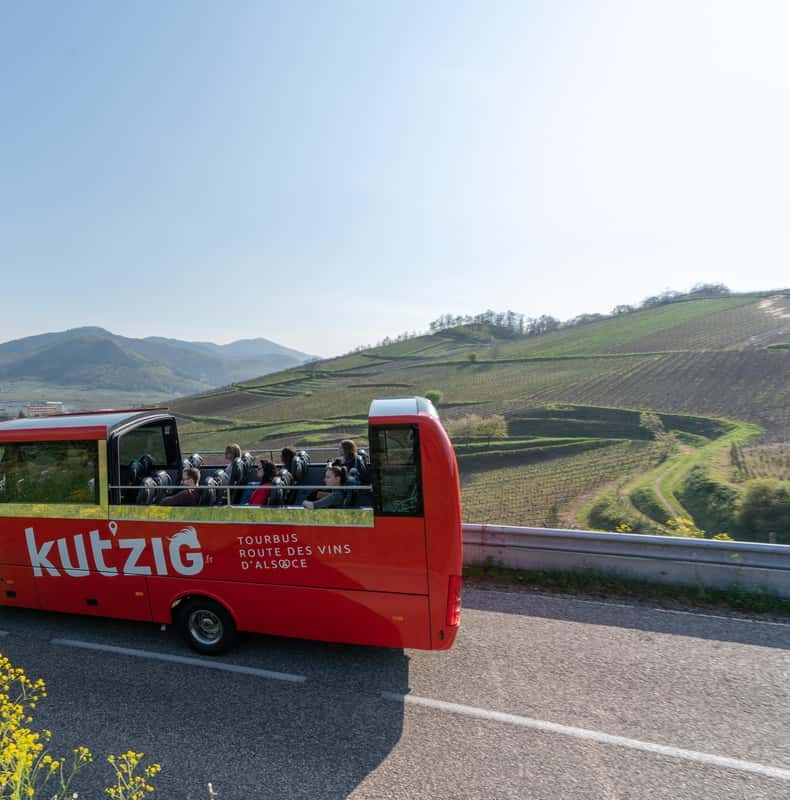
Route des Vins d'Alsace: Hop-On Hop-Off Convertible Bus Tour
A day ticket on the open-top bus between six wine-route villages, 8:30am to 7:00pm, with an audio app. It carries you; the cellars and the tastings are yours to arrange.
From $48 per person
Check Availability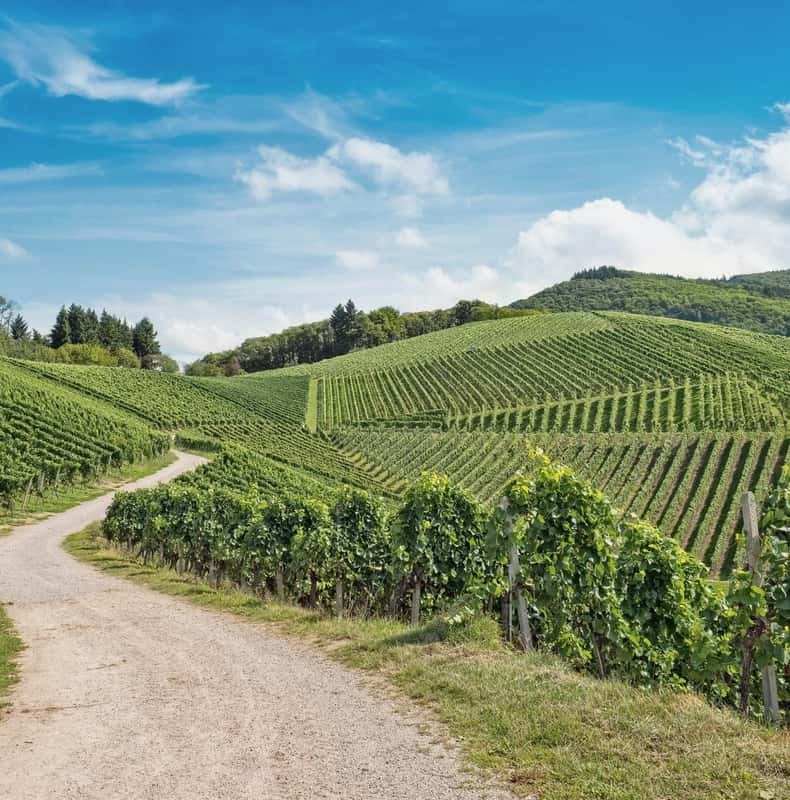
Near Colmar: Guided visit of vineyards and cellar + Tasting of 6 Alsace wines
Three hours at one estate near Colmar: an hour in the vines, an hour in the cellar and the vat room, then six Alsace wines at the table. You arrive under your own steam.
From $65 per person
Check Availability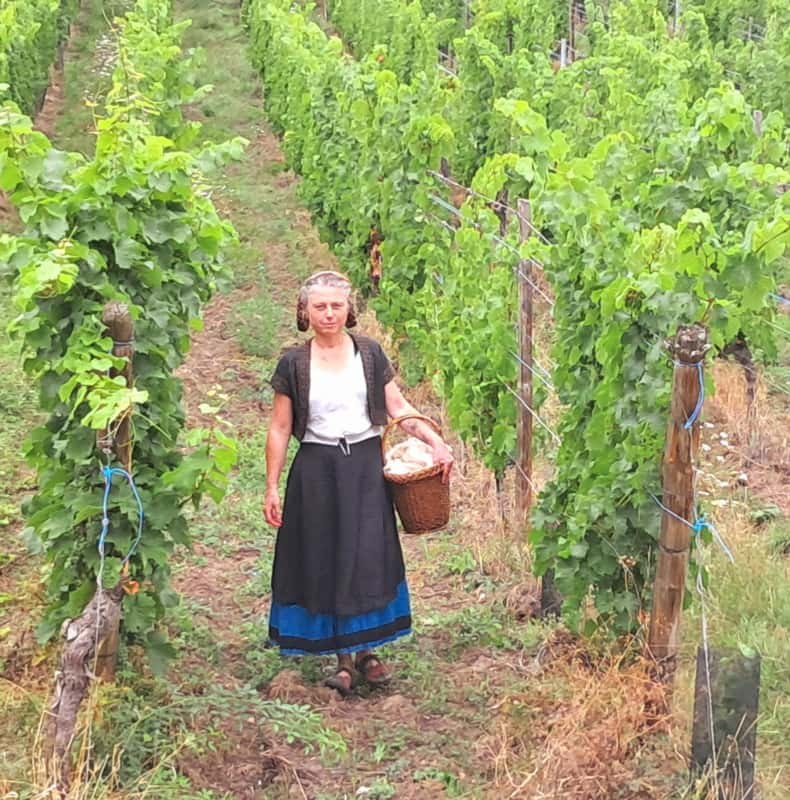
The true heart of Alsace in Riquewihr with optional wine tasting
Two hours walking Riquewihr with a local guide, as long or as short as you ask. The wine tasting is an optional extra here, not part of the price.
From $36 per person
Check AvailabilityNext: if you would rather be driven after all, every guided day is on Alsace Wine Tours.